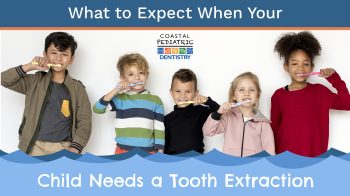
What to Expect When Your Child Needs a Tooth Extraction
 Hearing that your child may need a tooth removed can feel overwhelming. Fortunately, pediatric tooth extractions are routine, safe, and carefully managed. At Coastal Pediatric Dentistry in Bolivia, NC, we focus on making the process gentle, comfortable, and kid-friendly for both children and parents.
Extractions are often necessary to maintain your child’s oral health, prevent pain, and ensure proper development of permanent teeth.
Why Children May Need Tooth Extractions
While preserving natural teeth is always the goal, there are times when extraction is the healthiest option. Common reasons include:
- Severe tooth decay that cannot be restored
- Infection or risk of spreading infection
- Overcrowding to prepare for orthodontic treatment
- Baby teeth that are delayed or blocking permanent teeth
- Trauma from accidents or injuries
Our team always explains all treatment options, ensuring parents can make informed decisions about their child’s care.
What Happens During a Pediatric Tooth Extraction
Your child’s comfort and safety are our top priorities. Here’s what to expect:
- Preparation: We explain the procedure in simple, reassuring language so children feel at ease.
- Anesthesia: Local anesthesia numbs the area to prevent pain. For children who are anxious or need more involved care, sedation options are available to keep them calm and relaxed.
- Extraction: Using child-friendly tools, the tooth is removed quickly and carefully.
- Aftercare: We provide detailed instructions for managing soreness, swelling, and care for the extraction site.
Most children recover quickly and return to normal routines within a day or two.
Tips for a Smooth Recovery
Proper care after an extraction is essential for healing. Follow these tips:
- Have your child bite gently on a gauze pad to control bleeding
- Offer soft foods and plenty of fluids for the first 24–48 hours
- Avoid crunchy, hard, or sticky foods that could irritate the site
- Discourage drinking through straws to prevent dislodging the blood clot
- Use over-the-counter pain relief as recommended by your dentist
- Attend any follow-up appointments to ensure proper healing
Following these steps helps minimize discomfort and promotes faster recovery.
What If It’s a Baby Tooth?
Even though baby teeth naturally fall out, some may require extraction if they are:
- Not loosening on their own
- Causing pain or infection
- Blocking space for permanent teeth
Removing a stubborn baby tooth can prevent orthodontic issues, ensure proper alignment of permanent teeth, and may involve the use of a space maintainer if necessary.
Signs Your Child May Need an Extraction
Parents should look out for:
- Persistent pain or swelling
- Severe decay visible on X-rays or by inspection
- A baby tooth that has not loosened but the permanent tooth is erupting
- Signs of infection, such as pus, redness, or fever
Early intervention often prevents complications and makes the extraction simpler and less stressful for the child.
Helping Your Child Cope with Anxiety
Extractions can be intimidating for children, but these strategies help:
- Talk positively about the visit without emphasizing pain
- Bring a favorite toy, blanket, or comfort item
- Practice deep breathing or “calm countdowns” before the appointment
- Reward bravery afterward with praise, stickers, or small treats
When children feel supported, they are more likely to have a calm, cooperative experience.
Compassionate Care Every Step of the Way
At Coastal Pediatric Dentistry, we approach extractions with patience, kindness, and child-friendly explanations. Our goal is to make the procedure safe, comfortable, and even empowering for your child.
We believe that a gentle dental experience builds trust and confidence, making future visits stress-free and positive.
Schedule an appointment today or visit our Frequently Asked Questions page to learn more about pediatric tooth extractions.
Every child deserves care that is safe, gentle, and tailored to their needs and every parent deserves peace of mind.
Disclaimer: The content of this blog is not intended to be a substitute for professional medical advice, diagnosis, or treatment. Always seek the advice of qualified health providers with questions you may have regarding medical conditions.